
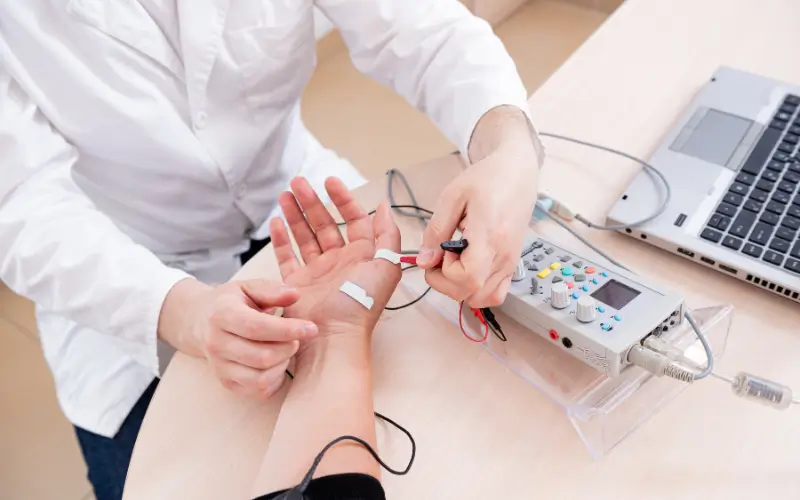
Electromyography (EMG) is a diagnostic procedure used to assess the health of muscles and the nerves that control them. It plays a critical role in identifying neuromuscular disorders, nerve dysfunction, and muscle abnormalities. At Sleep Clinic Pretoria, we offer advanced EMG testing to help diagnose conditions affecting movement, strength, and nerve function. This article provides an in-depth look at how EMG works, its applications, the testing process, and what patients can expect.
Table of Contents
What Is Electromyography (EMG)?
Electromyography (EMG) is a diagnostic test that evaluates the function of muscles and the nerves that control them. It detects electrical signals generated by muscles during movement and at rest, helping to identify whether muscle weakness, numbness, or pain is due to a muscle disorder, nerve dysfunction, or a neurological condition.
Muscles rely on nerve signals to contract. If there is a problem with the nerves, the signals may be weak, delayed, or absent, leading to symptoms such as weakness, spasms, or loss of control. EMG helps specialists pinpoint the exact cause of these issues, whether from nerve damage, muscle disease, or a communication problem between the two.
How Electromyography Works
EMG records the electrical activity of muscles using a fine needle electrode inserted into specific muscle groups. The test is conducted in three stages:
- At rest: normally, muscles should not produce electrical activity when relaxed. If activity is detected, it may indicate nerve or muscle damage.
- With slight contraction: the patient is asked to gently tighten the muscle to evaluate how well the nerves transmit signals under normal conditions.
- With full contraction: the patient exerts more force to test the muscle’s ability to function under stress. This helps determine if the issue worsens with activity.
The test evaluates motor neurons, the nerve cells responsible for sending signals from the brain and spinal cord to the muscles. If motor neurons are damaged, it can lead to symptoms such as muscle weakness, spasms, or difficulty with coordination.
Types Of Electromyography Tests
Electromyography can be performed using different techniques, depending on the level of detail required for diagnosis. Each method provides unique insights into muscle and nerve function.
Both types of EMG play an important role in diagnosing and managing conditions affecting muscle and nerve function. The choice of method depends on the specific symptoms being evaluated and the level of detail required for an accurate diagnosis.
Surface EMG sEMG
Surface EMG is a non-invasive test that uses electrodes placed on the skin to measure muscle activity. It is commonly used to assess general muscle function, monitor rehabilitation progress, and evaluate neuromuscular control in physical therapy or sports medicine. This method is useful for detecting changes in muscle activation patterns but does not provide detailed information about deep muscle function or nerve conduction.
Needle EMG
Needle EMG involves inserting a fine needle electrode directly into the muscle to record its electrical activity. This method provides highly precise data about how nerves communicate with muscles, making it a valuable tool for diagnosing neuromuscular disorders.
Unlike surface EMG, needle EMG can evaluate deeper muscles and detect abnormalities that may not be visible on the surface. While some discomfort may occur during the procedure, the test is brief and provides critical information for identifying conditions such as nerve compression, muscle disease, or disorders affecting nerve-to-muscle transmission.
Why Is Electromyography Performed?
Electromyography is used to diagnose conditions affecting nerve and muscle function. It is recommended for individuals experiencing symptoms that suggest possible nerve damage, muscle disorders, or issues with how nerves and muscles communicate.

This test is recommended for individuals experiencing:
- Muscle weakness or atrophy that worsens over time, affects daily activities, or occurs without a known cause
- Numbness, tingling, or loss of sensation in the hands, feet, or limbs, often linked to peripheral neuropathy or nerve compression
- Frequent muscle cramps, spasms, or twitching that interfere with movement or indicate possible nerve irritation
- Difficulty controlling movements, such as trouble gripping objects, loss of coordination, or stiffness when walking
- Persistent muscle pain that does not improve with treatment, which may be related to nerve damage, inflammation, or a neuromuscular condition
Understanding the source of these symptoms is essential for determining the right course of treatment. EMG provides critical insights that help specialists diagnose conditions early, allowing for targeted therapies that may prevent further nerve or muscle deterioration.
Conditions Diagnosed With Electromyography
Electromyography is used to diagnose conditions affecting nerve function, muscle health, and nerve-to-muscle communication. By measuring electrical activity, EMG helps specialists determine whether symptoms caused by nerve compression, muscle disease, or neuromuscular disorders.
Nerve Disorders
Nerve disorders interfere with the signals that control muscle movement and sensation. EMG helps detect abnormalities that indicate nerve damage or dysfunction.
Carpal Tunnel Syndrome
Carpal tunnel syndrome develops when the median nerve in the wrist is compressed, leading to numbness, tingling, and weakness in the hand. Symptoms often worsen with repetitive hand movements and can interfere with grip strength and fine motor skills.
Radiculopathy
Radiculopathy occurs when spinal nerve roots are compressed, typically due to a herniated disc or spinal stenosis. This condition can cause sharp pain, muscle weakness, or loss of reflexes, often affecting the lower back or neck.
Peripheral Neuropathy
Peripheral neuropathy results from nerve damage, commonly caused by diabetes, infections, or autoimmune diseases. It leads to tingling, burning pain, and muscle weakness, usually in the hands and feet. In some cases, it can affect coordination and balance.
Sciatica
Sciatica occurs when the sciatic nerve is compressed or irritated, causing pain that radiates from the lower back through the legs. This condition can restrict movement and worsen with prolonged sitting or physical activity.
Muscle Disorders
Muscle disorders affect the strength and function of muscle fibers, leading to weakness, fatigue, and reduced mobility. EMG helps distinguish muscle diseases from nerve-related conditions.
Myopathy
Myopathy refers to a group of disorders that weaken muscle fibers, making movement difficult. Unlike nerve disorders, myopathies originate in the muscle itself rather than the nervous system. Symptoms often include muscle fatigue, stiffness, and decreased endurance.
Muscular Dystrophy
Muscular dystrophy is a genetic condition that causes progressive muscle degeneration. Over time, muscles weaken, leading to difficulties with movement, posture, and daily activities. Different types of muscular dystrophy affect various muscle groups at different rates.
Polymyositis And Dermatomyositis
Polymyositis and dermatomyositis are inflammatory muscle diseases that cause persistent muscle weakness. Polymyositis primarily affects muscle tissue, while dermatomyositis also includes skin-related symptoms such as rashes. These conditions can develop gradually and may worsen without treatment.
Neuromuscular Junction Disorders
These disorders affect the communication between nerves and muscles, leading to muscle fatigue and weakness. EMG helps identify breakdowns in nerve signal transmission.
Myasthenia Gravis
Myasthenia gravis occurs when the body’s immune system interferes with nerve signals, preventing muscles from responding properly. Symptoms include muscle weakness that worsens with activity but improves with rest. It commonly affects the eyes, face, and throat muscles, leading to vision problems, difficulty swallowing, and speech difficulties.
Lambert-Eaton Myasthenic Syndrome
Lambert-Eaton myasthenic syndrome is a rare disorder that disrupts nerve-to-muscle communication. It often begins with weakness in the legs and may progress to other muscles over time. Unlike myasthenia gravis, symptoms may temporarily improve with activity before worsening.
EMG Procedure
Understanding the EMG process helps patients know what to expect at each stage, from preparation before the test to the procedure itself and recovery afterward.
Preparing For An EMG Test
Proper preparation ensures accurate test results and a smooth procedure. Patients undergoing EMG at Sleep Clinic Pretoria should follow these guidelines:
Clothing And Skin Preparation
Patients should wear loose, comfortable clothing, as they may need to change into a gown depending on the muscles being tested. It is important to avoid using lotions, creams, or oils on the skin before the test, as these can interfere with electrode placement and signal accuracy.
Medication Considerations
Certain medications can affect test results. Patients should inform the specialist about any blood thinners, muscle relaxants, or nerve-related medications they are taking. In some cases, adjustments may be necessary before the test.
Hydration And Comfort
Staying hydrated helps improve nerve conduction and ensures reliable readings of muscle activity. Patients should also try to relax before the procedure, as excessive muscle tension can affect test results.
During An EMG Test
EMG testing is performed in a clinical setting and typically lasts between 30 to 60 minutes. The procedure involves several steps to evaluate electrical activity in muscles and nerves.
The specialist identifies the muscles and nerves being examined. The skin is cleaned to ensure proper electrode contact, reducing interference in the readings. Patients are positioned comfortably to allow access to the areas being tested.
A fine needle electrode is inserted into the muscle to detect electrical activity. The patient may be asked to relax or contract the muscle at different intensities while the specialist records responses. Electrical signals are analysed in real-time, and any irregularities in muscle or nerve function are noted.
After The EMG Test
Once the procedure is complete, patients can resume normal activities immediately. Mild soreness or slight bruising may occur at the needle insertion sites, but these symptoms typically resolve within a few hours. If any discomfort persists, patients should follow the specialist’s recommendations for pain relief.
The specialist will discuss the findings and next steps, which may include further diagnostic testing, treatment recommendations, or physical therapy. EMG results provide valuable insights into nerve and muscle health, allowing for precise diagnosis and targeted treatment.
Interpreting EMG Results
EMG testing provides valuable insights into the cause of muscle weakness, abnormal movements, and nerve dysfunction. The results help specialists determine whether symptoms stem from nerve disorders, muscle diseases, or issues with nerve-to-muscle communication. By analysing the electrical activity recorded during the test, patterns can be identified that confirm or rule out specific conditions.
Normal EMG Results
In healthy muscles, there is little to no electrical activity when they are at rest. When movement occurs, nerve signals trigger a predictable increase in electrical activity. This indicates that the nerves are functioning properly and effectively transmitting signals to the muscles. A normal EMG result suggests that symptoms such as weakness or pain may be caused by factors unrelated to nerve or muscle dysfunction, such as joint problems, inflammation, or metabolic conditions.
Abnormal EMG Results
Unusual electrical activity in the muscles can indicate a variety of conditions. If electrical signals are present while the muscle is at rest, it may suggest nerve irritation or damage. Irregular or weak responses when the muscle is contracted can point to neuromuscular disorders, peripheral nerve dysfunction, or conditions affecting motor neuron function. The severity and location of abnormalities provide important clues in diagnosing disorders such as peripheral neuropathy, myopathy, or nerve compression syndromes like carpal tunnel syndrome and radiculopathy.
How EMG Results Guide Treatment
Once the specialist has analysed the results, an appropriate treatment plan can be developed. If the EMG shows evidence of nerve compression, strategies may focus on relieving pressure through physical therapy, lifestyle adjustments, or in some cases, surgical intervention. If muscle disease is suspected, rehabilitation and targeted therapies may be recommended to improve strength and mobility. For conditions affecting nerve-to-muscle transmission, medications or specialised therapies may be required to enhance communication between the nervous system and muscles.
By providing a clear understanding of how nerves and muscles function, EMG testing plays a crucial role in diagnosing and managing neuromuscular conditions. A precise diagnosis allows for more effective treatment strategies, helping patients regain strength, improve mobility, and manage symptoms more efficiently.
Why Choose Sleep Clinic Pretoria For EMG Testing?
At Sleep Clinic Pretoria, we provide comprehensive electromyography testing using advanced technology and expert evaluation. Our specialists have extensive experience in diagnosing and treating neuromuscular conditions, ensuring patients receive accurate results and personalised care.
If you have symptoms of nerve dysfunction, muscle disorders, or neuromuscular conditions, an EMG test at Sleep Clinic Pretoria can help determine the cause. Early diagnosis leads to more effective treatment and better long-term outcomes.
Contact us today to schedule your electromyography test and take the next step toward better nerve and muscle health.
